
Building Loops, Not Lines
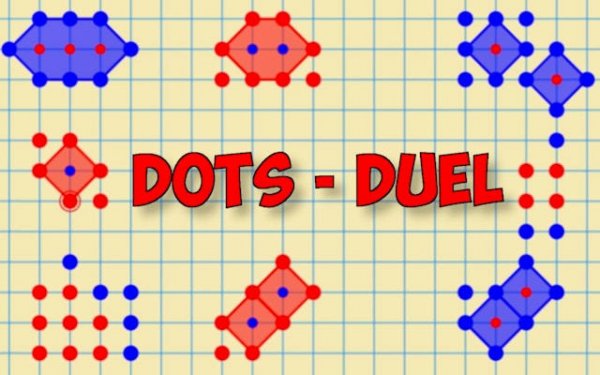
Most abstract strategy games reward occupying territory or connecting edges. Grid Capture asks for something different: a continuous closed chain of your own markers. On each turn, you place one colored marker on an empty intersection. That marker stays for the rest of the match, so every placement is permanent. The goal is to surround opposing markers with your own loop. When your chain closes, any enemy pieces trapped inside are removed and converted into points. Because markers never move, the board becomes a record of every decision both players have made.
Why There Is No Luck
Grid Capture contains no dice, no card draws, and no hidden information. Both players see the full board and know exactly what remains. Success comes from reading patterns, calculating several moves ahead, and recognizing when a placement builds your own structure while blocking an opponent's. The game rewards patience over speed. A single careless marker can create a gap your opponent exploits, or it can accidentally complete a loop for them. Players who enjoy chess or Go will recognize the satisfaction of pure positional thinking, though the rules here are simpler and matches tend to move faster.
Adjusting Grid Size for Pace
The grid is not fixed. Smaller boards produce quick, intense matches that can end in minutes, with fewer intersections and tighter margins for error. Larger boards open up longer sequences, more complex loop shapes, and deeper planning. This flexibility lets two players choose the pace that fits their mood, whether that means a short competitive burst or a slower, more analytical session. The core rule stays the same at every size, so the game scales without adding new mechanics.
Playing Head-to-Head
Grid Capture is built strictly for two players. It supports online matches, so you can challenge a friend or face other players remotely. Turn-based play means there is no time pressure unless you agree to it; you can take as long as you need to consider each placement. Clear win conditions ensure every match ends with a definitive result, which makes the outcome feel earned rather than arbitrary. The combination of permanent placements and no randomness means a loss usually points to a specific decision you can review and learn from.
Comments
0 comments