Jumping Joe: Cheerful Platform Adventure

Jumping Joe: Cheerful Platform Adventure

Developer: Sound Core Creations
Published: 1728835200
Updated: 2026-09-30
Agility Platformer Casual

Reviews

Jumping Joe: Cheerful Platform Adventure targets players who want a low-pressure arcade platformer with a clear goal loop: collect stars, find the key, reach the exit. The tap-and-hold jump mechanic is easy to understand but creates genuine timing decisions as obstacles multiply. Bright visuals and upbeat audio support short or extended sessions. The main limitation is that the source describes a straightforward structure without mentioning extra modes, multiplayer, or narrative depth, so players seeking complex systems may find it lean.

About this game

Tap-to-Jump Control Scheme

Jumping Joe uses a single-input system: tap or click to jump. The length of the press determines jump height and distance. A quick tap produces a short hop suited to tight gaps, while holding longer sends Joe farther and higher. This binary control keeps the barrier to entry low while still demanding precision as layouts grow more complex. [IMG_1]

Level Goals and Collectibles

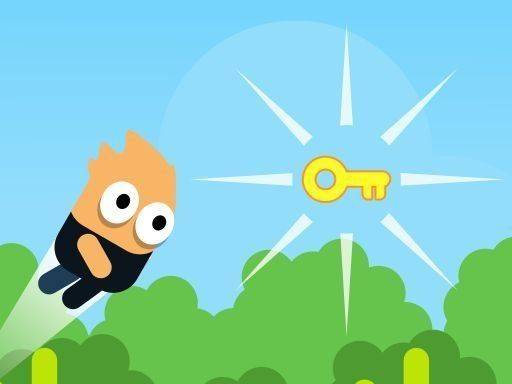
Each stage asks the same core task: move Joe from the starting point to the exit door. Two optional objectives shape how you play. Shining stars scattered through the level add to your score, and a golden key is required to unlock the exit. Skipping the key means no progression, so route planning matters as much as reflexes. [IMG_2]

Obstacles and Timing Pressure

Floating platforms and moving obstacles form the main challenge. Because Joe's jump arc is fixed by input duration, success depends on reading movement patterns before committing to a leap. Later levels combine these elements into tighter sequences, turning simple jumps into small timing puzzles. The difficulty curve stays gentle but consistently asks for better anticipation. [IMG_3]

Presentation and Session Length

Bright graphics and an upbeat soundtrack give the game a positive, inviting tone. Levels are short enough for quick sessions yet structured for longer play. The combination of cheerful visuals and escalating precision makes it approachable for younger players while still offering enough challenge for returning ones.

Editorial Notes

Compatibility

• OS: Windows 10+, macOS 11+, iOS 14+, Android 10+
• Browsers: Chrome 100+, Safari 15+, Edge 100+, Firefox 100+
• Not compatible with Internet Explorer
Tested on real devices ✅ works as expected

Faq

Is Jumping Joe suitable for young children?
The game is described as family-friendly with bright graphics and upbeat music. Its tap-to-jump control is simple enough for beginners. However, later levels introduce moving obstacles and tighter timing, so younger players may need help with more complex layouts. No age rating is specified in the source material.
What happens if I miss the golden key in a level?
The golden key unlocks the exit door. Without it, you cannot complete the stage even if you reach the door. Stars are optional for score, but the key is mandatory for progression. Plan your route to grab it before heading to the exit.
Does Jumping Joe have multiplayer or online features?
The provided information does not mention multiplayer, online play, or leaderboards. It appears to be a single-player experience focused on level completion and score collection. Any social or competitive features would need to be confirmed through the game's official store page or developer.
How does the jump control differ between short and long presses?
A short tap produces a small hop, useful for narrow gaps or precise landings. A longer press makes Joe jump higher and farther, covering bigger distances. Mastering when to use each type is the core skill. The game does not use a separate jump button or double-jump mechanic based on the input.
Are there checkpoints or lives in Jumping Joe?
The source material does not specify a lives system, checkpoints, or respawn rules. It only describes collecting stars and keys to reach the exit. Players should expect to restart a level if they fall or miss the key, but exact failure conditions are not detailed in the available information.
What makes later levels harder than early ones?
Difficulty increases through more complex level layouts, moving obstacles, and tighter platform arrangements. Early stages teach the jump mechanic with generous spacing. Later stages combine floating platforms and moving hazards into sequences that require careful observation and timing before each jump.

Comments

0 comments
U
User
★ ★ ★ ★ ★
Loading comments...