
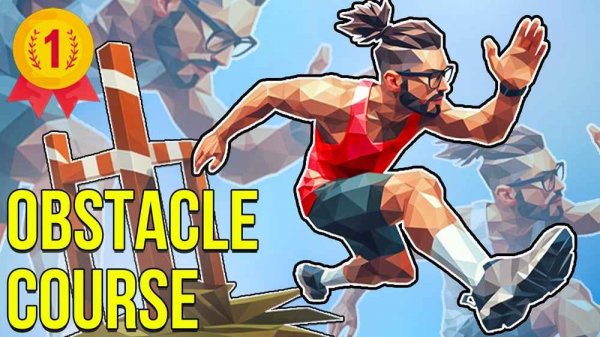
Core Movement Mechanics
At the heart of this experience is a physics system that gives your character weight and momentum. Every jump, slide, and climb feels grounded because the game calculates how your ragdoll body interacts with surfaces. Unlike games with predetermined animations, here your character's limbs move independently, leading to unpredictable but often hilarious outcomes. Success depends on understanding how your character's center of mass shifts during movement. A poorly timed jump might send you tumbling, while a well-executed leap can clear wide gaps. This system rewards practice and adaptability.
Course Design Philosophy
The obstacle courses are built around three core challenges: precision platforms, timing-based traps, and momentum puzzles. Precision platforms require careful foot placement on narrow beams or moving blocks. Timing-based traps include spinning bars, collapsing floors, and swinging pendulums that demand patience. Momentum puzzles use ramps and loops where maintaining speed is crucial. Courses gradually introduce these elements, then combine them in later stages for increased difficulty. The layout encourages experimentation, as there is often more than one way to reach the finish.
Visual and Audio Atmosphere
The 3D environments are clean and functional, with bright colors that help players quickly identify platforms and hazards. Each course has a distinct theme, from industrial warehouses to outdoor ruins, which affects the types of obstacles you encounter. The sound design focuses on feedback: a satisfying thud when you land, a creak when a platform starts to tip, and a splash if you fall into water. This audio clarity helps players gauge their performance without needing to look at a score. The interface is minimal, keeping the focus on the action.
Approaches to Mastery
Players can choose between speed runs and careful exploration. Speed runs emphasize maintaining momentum and finding shortcuts, while careful exploration involves studying each obstacle before attempting it. The physics engine supports both styles: a fast approach might work on some sections but cause crashes on others. Many players find that mixing both strategies yields the best results. Taking time to observe the course before moving can reveal hidden paths or safer routes. The game does not punish failure harshly, encouraging repeated attempts to learn from mistakes.
Replayability Factors
Because the physics engine produces slightly different results each time, no two runs feel identical. This variability keeps the game fresh even after multiple playthroughs. Some courses include optional challenges, such as completing them without touching certain surfaces or within a time limit. These optional goals add depth for players seeking extra difficulty. The combination of physics-driven unpredictability and structured course design creates a loop where each attempt teaches you something new about movement and timing.
Comments
0 comments